
Flow-Through vs. Recirculation: Choosing the Right Water Management System for Your Splash Pad

When designing and building a splash pad, it’s easy to focus on the elements everyone will see every day: the features, the layout, and the way the space invites movement and connection.
But one of the most important components of a successful splash pad works quietly behind the scenes: the water management system.
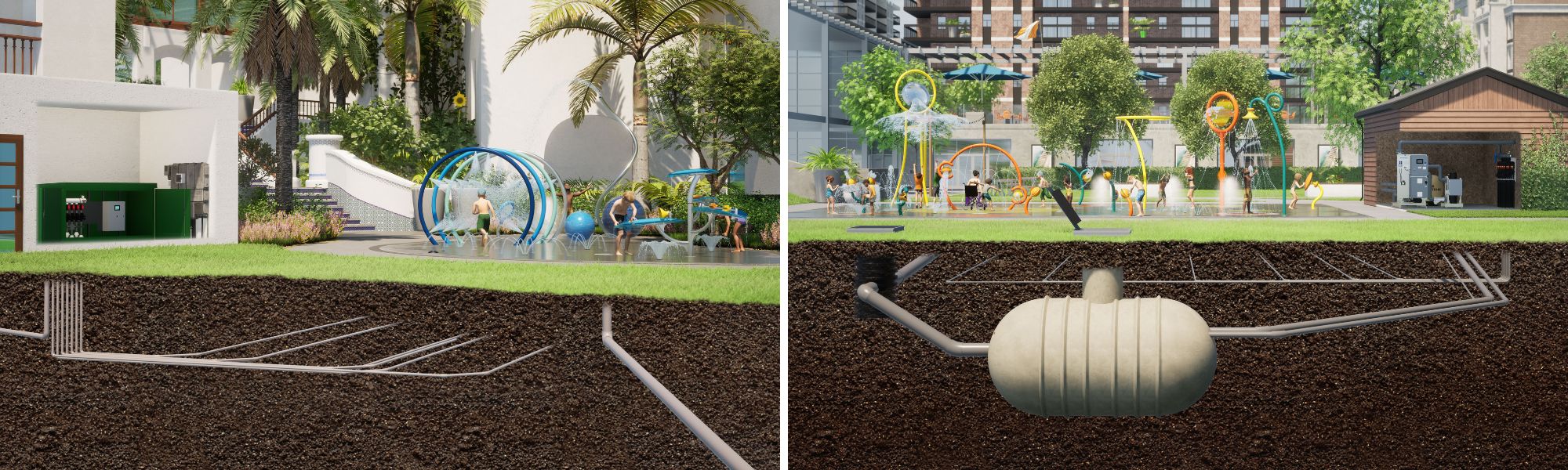
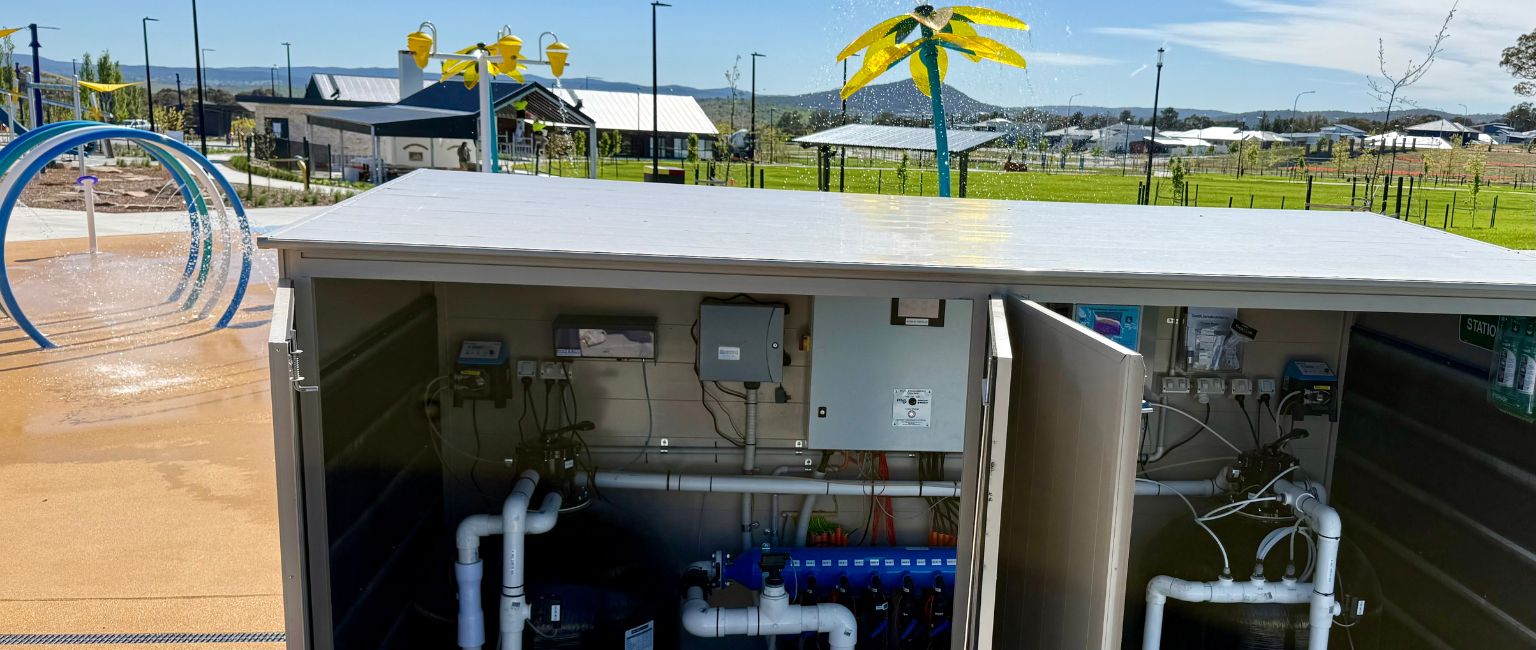
Water management systems are the behind-the-scenes infrastructure that controls how water is supplied, treated, monitored, and either discharged or reused within a splash pad. They are essential for keeping aquatic play spaces safe, compliant, and operating smoothly season after season. For municipalities and landscape architects, selecting the right system isn’t just a technical decision; it’s a long-term operational investment.
Waterplay offers two primary splash pad water management solutions: flow-through and recirculation. We work closely with communities to evaluate site conditions, regulatory requirements, and operational capacity to ensure the right system is integrated into the overall splash pad design.
Choosing the right water management solution can start to feel very complex, but this is where Waterplay’s experienced team adds real value. We help you navigate regulatory requirements, coordinate with engineers and health authorities, evaluate infrastructure needs, and weigh upfront costs against long-term operational impact. By bringing technical expertise and practical insight to the table early, we help ensure your water management system supports both your design vision and your long-term performance goals.
What is a Flow-Through System?
For communities looking for a lower maintenance, budget conscious option, a flow-through water management system can be a practical solution.
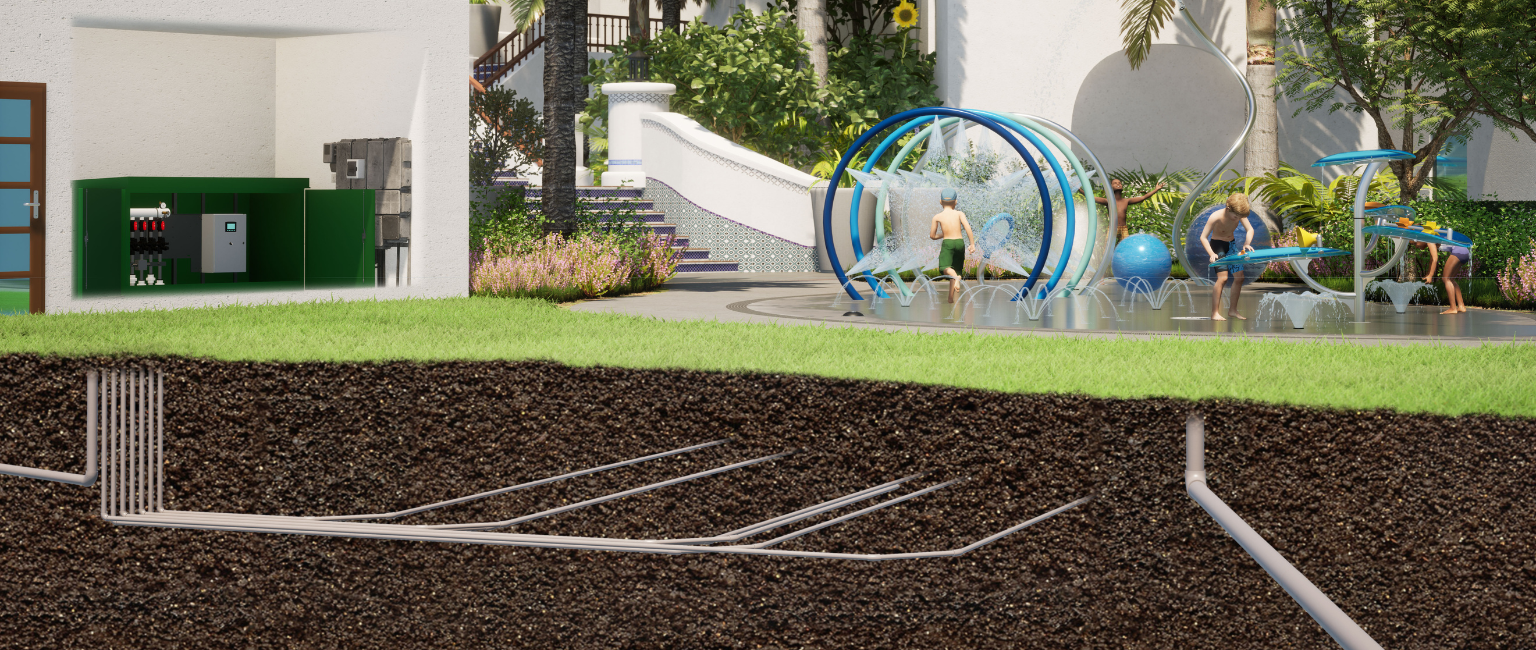
Flow-through systems use potable municipal water that feeds directly through the splash pad features before draining into a sanitary or storm system. The water passes through once and is not reused.
Because these systems don’t require holding tanks or advanced filtration infrastructure, they aren’t as mechanically complex as other solutions. This can mean lower upfront costs and simplified operation for your splash pad. Flow-through systems can also allow for straightforward startup and shutdown procedures, which may be beneficial for seasonal splash pads.
They are often well suited to smaller communities, lower-traffic splash pads, and regions where water supply is stable and abundant.
However, there are some important considerations to keep in mind. Flow-through systems use a continuous supply of fresh water during operation, which can result in higher overall water consumption. Depending on your local utility rates, that may impact long-term operating costs for your splash pad. Additionally, local health codes and discharge regulations should be carefully reviewed to ensure the system you’re looking at will be compliant.
When properly aligned with regional regulations and community needs, flow-through water management systems can deliver safe and reliable aquatic play experiences.
What is a Recirculation System?
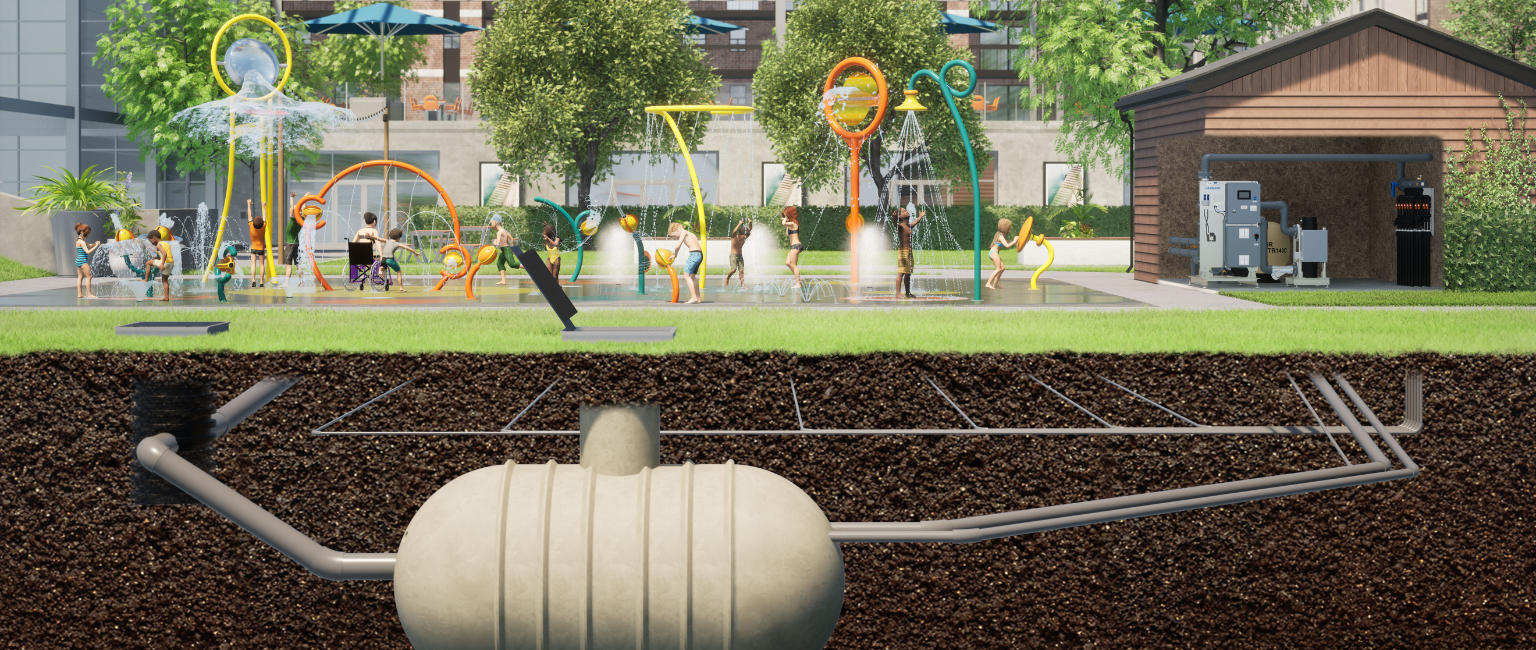
Waterplay’s recirculation water management system collects water from the splash pad surface, directs it to an underground holding tank, and filters, treats, and disinfects it before returning it safely to the play features. Because the water moves through a controlled, closed loop system, operators can continuously monitor and balance water quality to meet public aquatic health standards.
These systems rely on holding tanks, pumps, filtration equipment, automated controllers, and chemical treatment systems. While this added infrastructure increases upfront costs and mechanical complexity, it provides a strong, sustainable solution for high traffic splash pads and communities focused on water conservation.
Ongoing maintenance is essential. Regular chemical testing, equipment inspections, and preventative servicing ensure water clarity, proper disinfection, and continued compliance with local regulations. In many regions, recirculation systems are required by health authorities. Even where optional, they are often preferred in water conscious communities or areas with seasonal restrictions.
Although the initial investment is higher than a flow-through system, reduced water consumption and long-term operational savings often make recirculation a smart, future focused choice for municipalities.
Factors to Consider When Choosing a System
Selecting the right water management system requires a thoughtful evaluation of several interconnected factors.
First, you’ll want to review your local regulations, as they often play a defining role in deciding which water management system will be right for your project. Some jurisdictions require recirculation systems, while others permit both options under specific conditions. Working closely with local health authorities and regulatory bodies early in the process is essential.
Budget is another important consideration. While flow-through systems may offer lower upfront costs, recirculation systems can provide long-term savings through reduced water usage. Evaluating both capital and operational expenses helps create a clearer financial picture for the future of your space.
The climate of your space and operating schedule of your splash pad should also be reviewed. Spaces that operate year-round or for extended seasons may benefit from the efficiencies of recirculation systems.
Lastly, projected traffic and community priorities matter. High use splash pads place greater demand on water systems. Communities with strong sustainability goals may prioritize water reuse as part of their broader environmental commitments.
Water treatment systems are not one size fits all, and each unique project deserves a solution tailored to its specific needs.
How Waterplay Supports Your Decision
Choosing the right water treatment system is not something to figure out at the last minute. It requires thoughtful planning, coordination with technical partners, and a solid understanding of local regulations and long-term operating needs, so it should be a decision that is made early on in the planning process.
That’s where Waterplay comes in. We work alongside municipalities and landscape architects from the earliest planning conversations through installation. Together, we look at site conditions, expected usage, mechanical needs, and health code requirements to make sure the selected system fits seamlessly into the overall splash pad design.
Whether your project is best suited for the straightforward approach of flow-through or the long-term efficiency of recirculation, our team is there to guide the process. From first concept to final commissioning, and beyond, we help ensure your splash pad is built to perform, operate smoothly, and serve your community for years to come.
Making the Right Splash Pad Investment
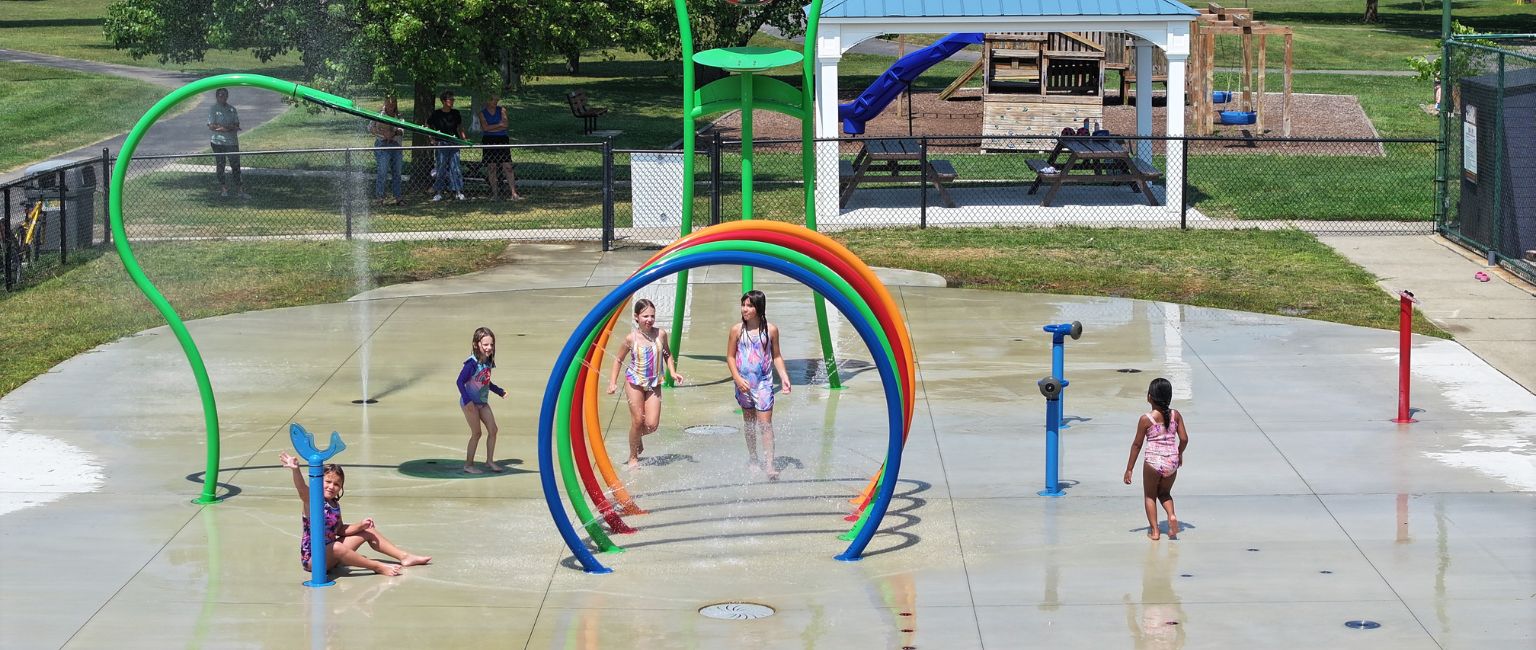
Both flow-through and recirculation systems can support safe, engaging play environments for children of all ages and abilities. The right choice comes down to aligning the system with your community’s regulations, water resources, operational capacity, and long-term vision for the splash pad.
When water treatment is considered intentionally from the start, it strengthens the entire project. It protects public health, supports sustainability, and safeguards your investment.
And with Waterplay as your partner, you can move forward with clarity and confidence, knowing your splash pad is built on a foundation designed to perform for years to come.